Pi Glilot
TM"L 3007 – South Glilot





about the project
In 2021, the Ministerial Committee for Interior Affairs declared the Pi Glilot complex as a "Preferred Housing Site." This declaration unified the planning under a single, consolidated plan – TM"L 3007 – South Glilot.
In March 2022, the Israeli government rejected appeals filed against the declaration, thereby granting final validation to the VATMAL (National Housing Committee) track for the complex.
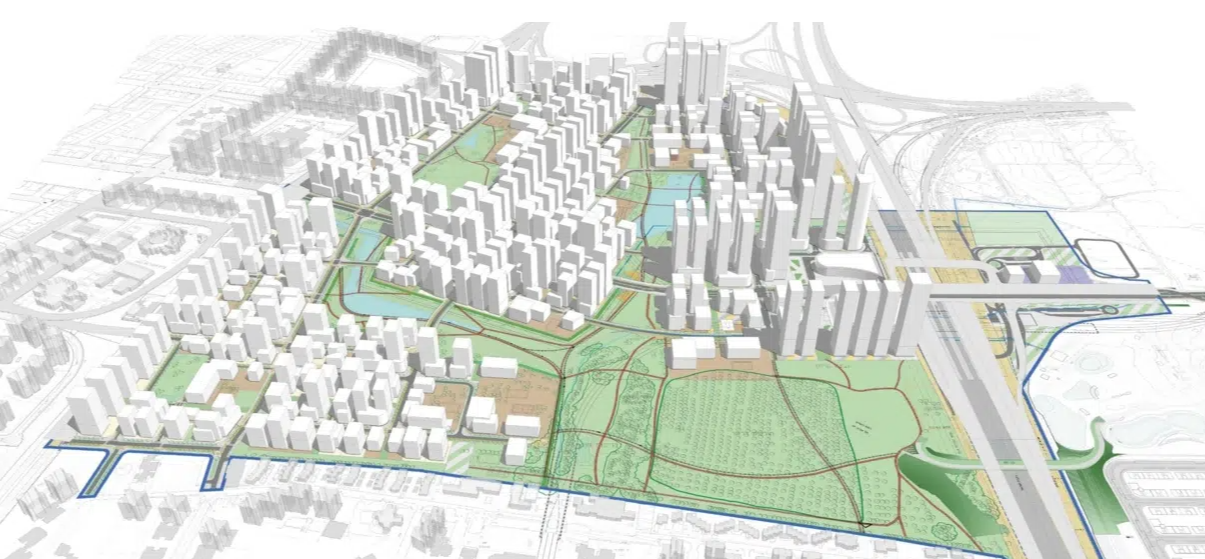
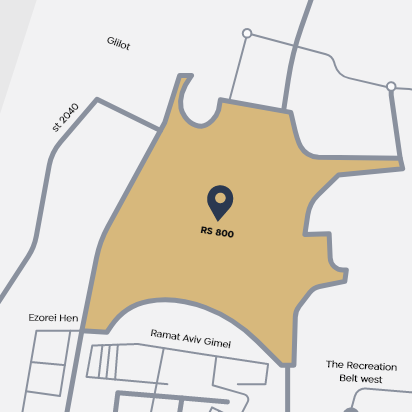
The new plan represents a significant planning leap forward compared to previous plans (TA/2812 and RSh/800), including a substantial addition of building rights. It proposes the establishment of an urban district comprising approximately 18,500 housing units (as of the initial deposition version), over 1.5 million square meters of employment space, and an integrated transport hub (MTH"M) featuring Metro stations (M1, M3) and a heavy rail station.
The plan effectively rezones the Pi Glilot area, bounded by Route 5 to the north, the Ayalon Highway to the east, Route 2 to the west, and Tel Aviv to the south. The goal of the plan is to establish a mixed-use urban district for employment and residential purposes, featuring the potential construction of approximately 18,500 residential units, about 1.5 million square meters for employment, and a large park spanning roughly 430 dunams. All of this is located within the municipal boundaries of Ramat Hasharon and Tel Aviv.
By virtue of the approved master plans, a detailed plan was prepared, dividing the area into planning complexes. Within each complex, reparcellation (balancing) tables will be drafted to allocate land to the landowners. Represented landowners will be grouped and allocated together into independent plots.
Our firm consolidates numerous landowners within the plan in order to realize their rights collectively. An organized group offers many advantages, such as significant cost savings on the path to receiving rights, prevention of partnership dissolutions (liquidation of co-ownership), closer professional monitoring of planning developments, and the ability to campaign effectively regarding both property rights and taxes/levies.